

Rock Crystal Through History, Craft and Design | De Ferranti
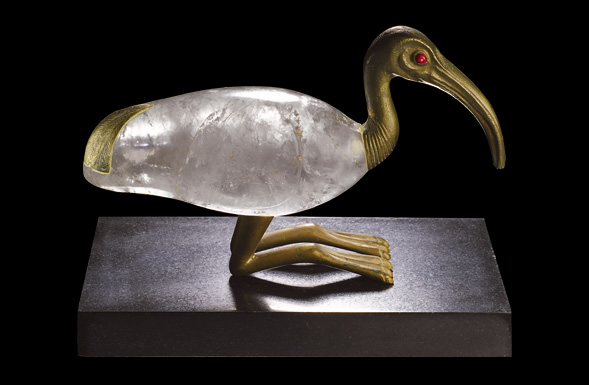
For Architects, Interior Designers and Project Teams
At De Ferranti, so much of what we do has you in mind. We know professional readers need more than attractive editorial. You need well-researched material insight that can support specification, spark design ideas, and add value to your CPD record. So we have done the research for you and turned that knowledge into something clear, useful and easy to apply.
To make that value immediate, we have also included two CPD-friendly templates at the end of the article: one for architects and one for interior designers. They are designed to help you log the learning quickly and with minimal effort.
We see architects, interior designers and project teams as important long-term partners and collaborators in the way we work, think and create.
The Enduring Fascination with Rock Crystal in Design and Architecture
There are few materials in which the boundary between the natural and the ethereal feels quite so elusive. Rock crystal possesses the permanence and substance of stone, yet its extraordinary relationship with light gives it an almost otherworldly presence. It is this delicate balance between what nature has created and what the human hand can reveal that lies at the heart of its enduring allure.
A naturally occurring variety of crystalline quartz, rock crystal has fascinated craftspeople, artists and collectors for thousands of years. Its transparency recalls water or ice, although its formation and physical properties distinguish it from glass. Within a single specimen, remarkable clarity may give way to delicate internal veils, mineral inclusions and fractures formed during its development deep within the Earth.
These features distinguish one specimen from another. Its appearance is never entirely fixed. A change in viewing angle or illumination may reveal details that were previously invisible, while polished surfaces can produce an interplay of reflection, refraction and apparent depth.
For architects and interior designers, the material's appeal extends considerably beyond decorative ornament. Rock crystal can be carved into sculptural objects, basins, architectural fittings and furniture components. It can be cut into slabs, incorporated into composite surfaces, combined with metals or integrated into illuminated installations. Its transparency also allows designers to explore layered compositions in which the material becomes a means of creating depth rather than simply providing a visible surface.
Although rock crystal (also known as quartz) is a relatively hard material, it is also brittle. Natural fractures influence the dimensions of a finished object, while variations in clarity and internal structure affect how individual pieces respond to cutting, polishing and illumination. The manufacture of substantial objects from solid crystal therefore requires careful material selection, specialist craftsmanship and an acceptance of the constraints imposed by nature.
At De Ferranti, rock crystal has been explored across a broad spectrum of decorative and architectural applications, from carved basins and sculptural objects to screens, lighting, furniture and elaborate decorative surfaces.
The material also provides a compelling thread through the history of human craftsmanship. Prehistoric communities fashioned it into tools and ceremonial objects; ancient civilisations valued its unusual appearance; Islamic craftspeople produced intricately carved vessels, while European collectors placed it among their most treasured possessions. Twentieth-century designers rediscovered its sculptural qualities, and contemporary workshops continue to explore its architectural possibilities.
This article follows that history, examines the mineral's properties and considers the practical challenges of specifying rock crystal for contemporary interiors.
At its heart lies a question that has occupied craftspeople for centuries: how can a material of such extraordinary natural beauty be shaped without losing the qualities that make it exceptional?
A Material Worked Since Prehistoric Times
Long before rock crystal became associated with precious decorative objects, its value was recognized, and it was worked by prehistoric communities.
Archaeological discoveries suggest that its significance extended beyond ordinary utility. Its transparency, unusual fracture characteristics and relative scarcity in some landscapes may have made it particularly desirable.
One of the most remarkable examples comes from Valencina de la Concepción, near Seville in southern Spain. Excavations at this extensive Copper Age settlement and funerary complex have revealed an exceptional assemblage of worked rock crystal, including a dagger blade, arrowheads and a crystal core dating to the third millennium BC.
Producing a long, carefully shaped blade from transparent quartz would have required considerable technical knowledge. Unlike more familiar flint, rock crystal presents distinctive challenges because of its crystalline structure, internal imperfections and the behaviour of the material during fracture.
These objects record careful selection and controlled working, with their appearance also raising questions about their purpose. The labour involved in producing such objects, together with their archaeological contexts, suggests that their significance may have extended beyond practical use. Their transparency and visual rarity could have contributed to their social or ceremonial importance.
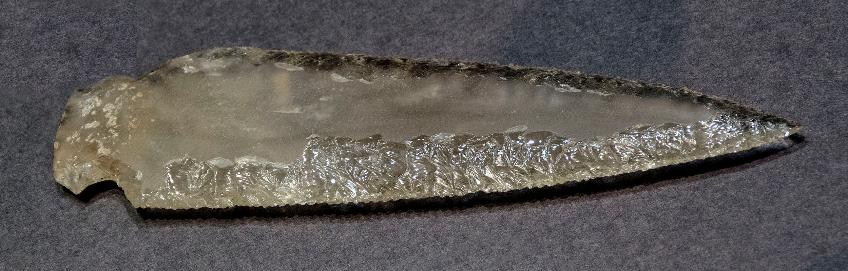
Copper Age rock crystal dagger from Valencina de la Concepción, Spain.
Rock Crystal in Neolithic Britain
Further evidence of prehistoric rock crystal working has emerged at Dorstone Hill in Herefordshire. Archaeologists investigating Early Neolithic activity at the site identified worked rock crystal and examined its possible significance within the practices of the communities who used it, with research published in the Cambridge Archaeological Journal considering the unusual characteristics of the material and the ways in which it was worked and deposited. The study argues that the crystals were selected and worked for reasons that went beyond ordinary toolmaking.
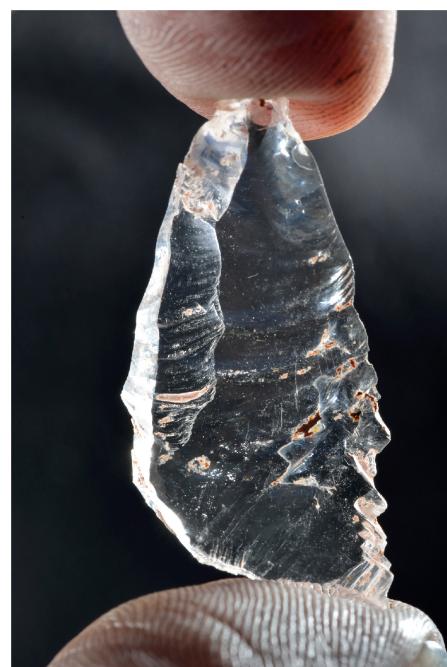
Rock crystal blade from Dorstone Hill, Herefordshire
Rock Crystal in Greece and Rome
In the ancient Mediterranean world, rock crystal became associated with luxury, craftsmanship and the natural mysteries of the Earth. The Greek word krystallos was associated with ice; some ancient writers thought the mineral was water frozen beyond melting.
Although the belief was mistaken, it reveals how extraordinary the material appeared to observers without a geological explanation for its formation. Greek and Roman craftspeople fashioned rock crystal into jewellery, vessels and small decorative objects. Its transparency distinguished it from opaque stones, while the difficulty of working it contributed to the skill associated with finished pieces.
From Egyptian Workshops to European Collections
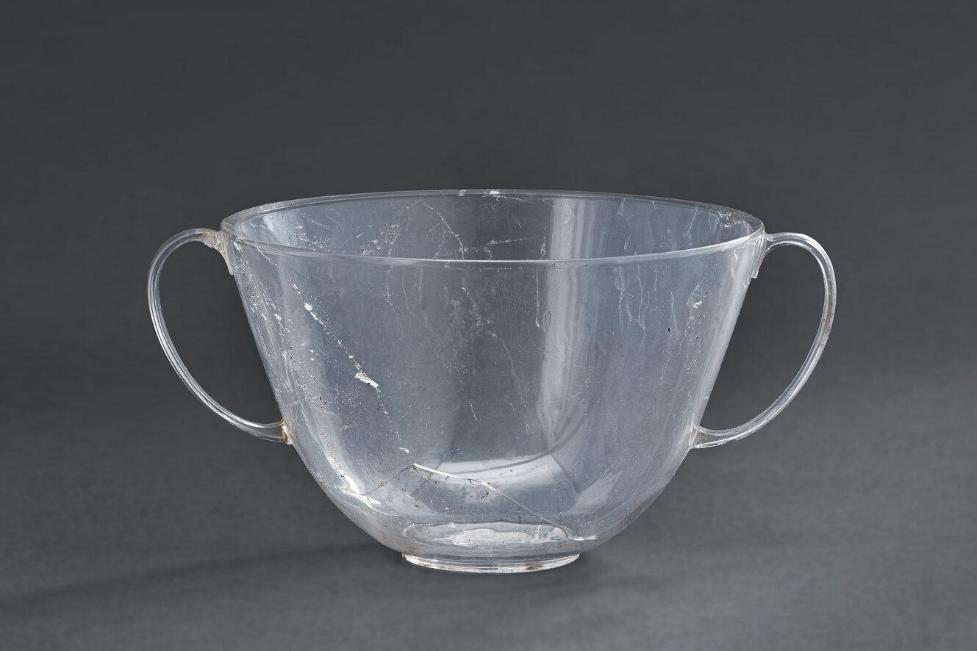
Roman rock crystal cup with, (27 BC–AD 14). Found at Capua, Italy. National Archaeological Museum, Naples
Among the most extraordinary surviving examples of rock crystal craftsmanship are the vessels produced in the medieval Islamic world, particularly those associated with Fatimid Egypt. During the tenth and eleventh centuries, Cairo became an important centre of artistic production, where craftspeople developed exceptional skills in working precious materials, including transparent quartz.
Fatimid patrons commissioned intricately carved vessels, flasks and decorative objects, with some surviving examples featuring relief-carved animals, vegetal ornament and inscriptions. Rock crystal cannot be worked like clay or molten glass; its hardness demands patient abrasion, while its brittleness requires care during every stage of cutting and polishing.
Therefore, creating a hollow vessel from a solid crystal presents particular challenges. Material must be removed from the interior without damaging the surrounding walls, and the exterior decoration must be fashioned without introducing fractures.
The Metropolitan Museum of Art preserves an important carved rock crystal flask attributed to Egypt and dated to the ninth or tenth century. Despite its modest dimensions, the object illustrates the precision achieved by craftspeople working with a demanding natural material. Its decoration was not applied to a manufactured surface, but was created by removing material from the crystal itself.
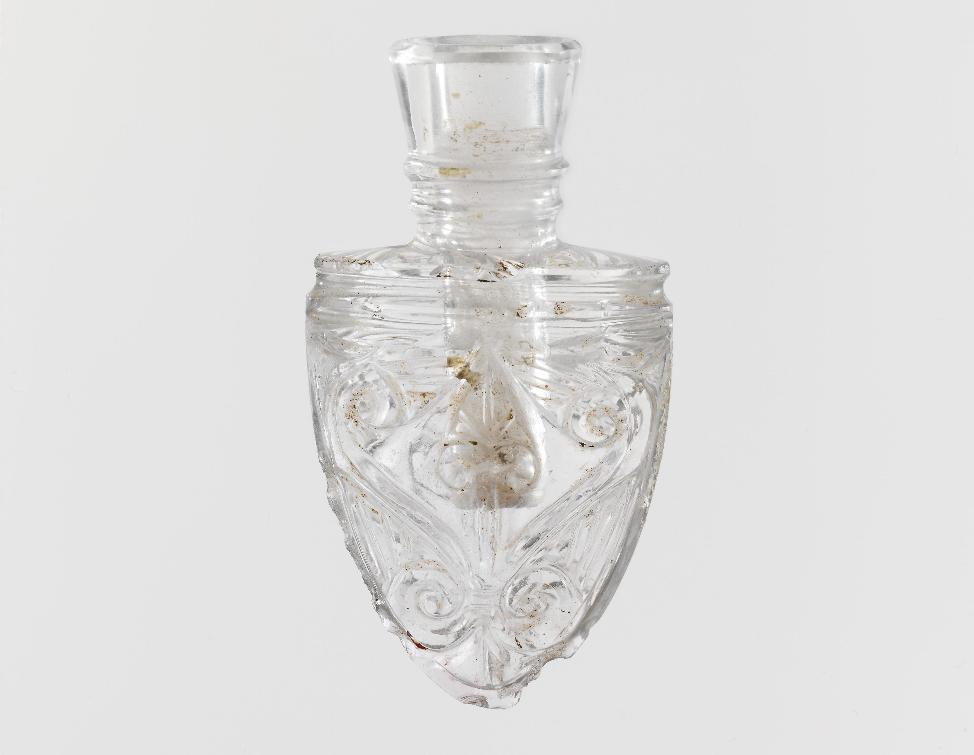
Carved rock crystal flask with vegetal decoration, attributed to Egypt, ninth–tenth century. The Metropolitan Museum of Art
Rock crystal vessels travelled far beyond the places where they were manufactured. Through trade, diplomatic exchange and the movement of luxury goods, examples entered European royal and ecclesiastical collections.
Some were subsequently mounted in precious metals and transformed into reliquaries. A vessel originally commissioned for an Islamic patron might acquire a new function within a Christian religious setting. These transformations reveal how exceptional objects could cross cultural and religious boundaries, acquiring new identities without losing their original craftsmanship.
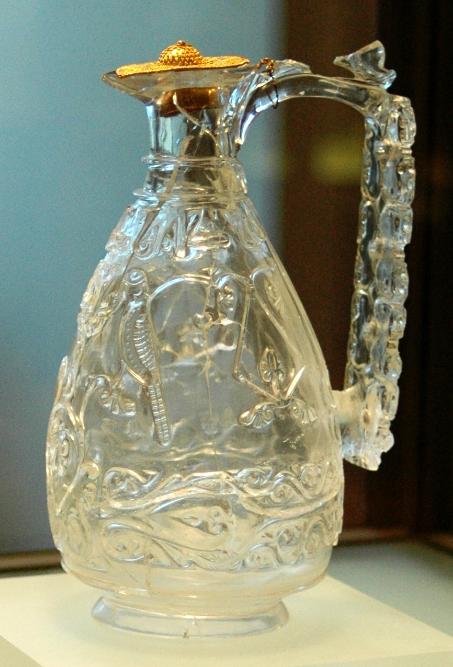
Rock crystal ewer with a filigree gold lid from the Saint-Denis treasury, Louvre
During the Renaissance and subsequent centuries, European collectors assembled extraordinary collections of natural specimens, antiquities, scientific instruments and decorative objects. These collections, commonly described as cabinets of curiosities, reflected a fascination with both the natural world and humanity's ability to transform its materials.
Rock crystal occupied an unusual position within them. In its unworked state, it represented a geological marvel; when carved into a vessel, sculpture or ornamental object, it became evidence of human ingenuity. This history is precisely what informs De Ferranti's Objects of Desire & Curiosities collection.
Geology, Sources and the Character of Quartz
Rock crystal is the colourless, transparent or near-transparent variety of crystalline quartz. Its chemical composition is silicon dioxide, SiO₂, one of the most abundant mineral compounds in the Earth's crust. Quartz occurs in numerous geological environments. Rock crystal may develop in hydrothermal veins, cavities and other settings where silica-rich fluids allow crystals to grow.
Although quartz itself is abundant, large specimens possessing the clarity, dimensions and structural integrity required for exceptional decorative objects are considerably less common, and it is this which helps explain why rock crystal can range from a relatively accessible mineral specimen to an exceptionally valuable raw material for carving.
Brazilian, Indian and Madagascan Rock Crystal
Brazil supplies quartz whose clarity can be valuable in objects intended to reveal their internal depth. Material available from India may show a more translucent, veiled appearance. These are tendencies in particular specimens, not reliable national grades. A large block may yield little sound material after fractured zones are removed. The choice should follow the intended form and desired passage of light, with each candidate block examined on its own terms.
Madagascar also produces colourless, milky and included quartz. A transparent specimen might suit a vessel or small carved component; veiled material can respond well to illumination. Provenance alone does not guarantee usable size or quality. A striking raw crystal may contain fractures that limit the finished form, so its orientation, sound volume and the proposed method of fabrication need to be assessed together.
De Ferranti's specialist artisans source blocks from Brazil, India and Madagascar and often keep selected material in stock. This gives a commission an unusually concrete starting point: the designer and workshop can examine an available block before fixing dimensions and form. Where a particular scale or optical character is required, further sourcing may be necessary. The finished design should follow the actual mineral rather than a general promise about its place of origin.
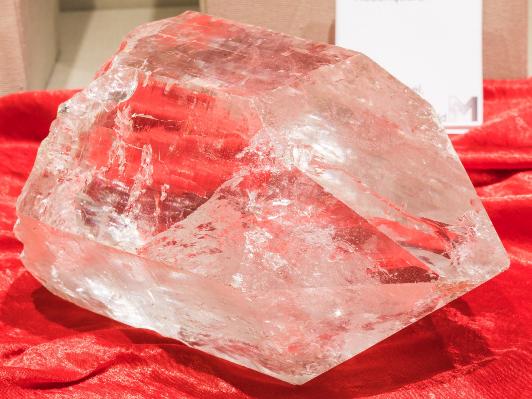
Natural rock crystal from Antsirabe, Madagascar
The Colour, Translucency and Sculptural Possibilities of Rose Quartz
Rose quartz is a pink variety of quartz whose colouring and soft translucency create a different effect from clear rock crystal. It commonly occurs as massive material, with variations of tone beneath a polished surface. Backlighting may reveal these variations, while bronze, brass or dark stone can provide a useful contrast. Vessels, basins, objects and illuminated panels are possible applications, subject to the size and condition of the block. De Ferranti's specialist artisans already cut, carve and polish natural rose quartz; its existing workshop experience provides a basis for developing specific commissions.
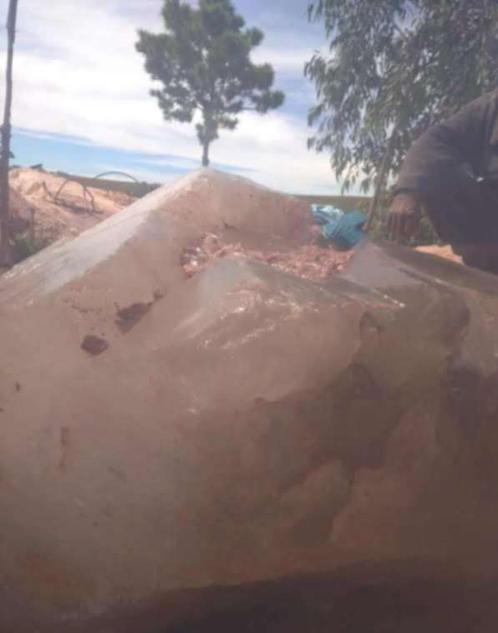
A substantial rock crystal quartz block at a quarry site, being inspected by De Ferranti
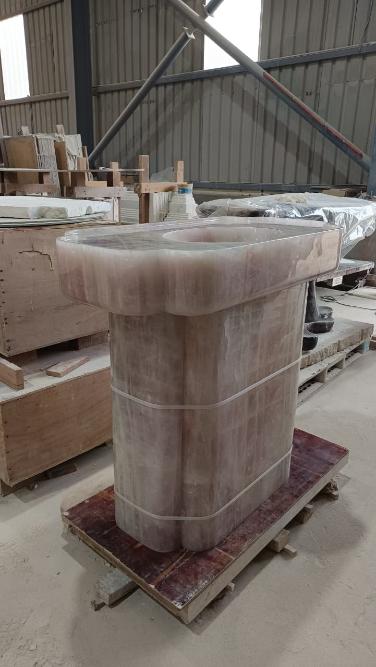
A solid rose quartz basin and vanity under fabrication for De Ferranti
Transparency permits a relatively clear view through a crystal, whereas translucency transmits light while obscuring detail. Internal veils and inclusions can enrich a decorative piece, yet a natural fracture may also weaken a finely machined component. A cloudy specimen may be unsuitable for an optically clear vessel but effective in a backlit panel. Selection begins with the proposed use, not a blanket preference for maximum clarity.
Quartz has a hardness of approximately 7 on the Mohs scale. It is therefore harder than many decorative stones, including marble and alabaster. However, hardness measures resistance to scratching, not resistance to fracture. Rock crystal is brittle. It can chip or break when subjected to impact, concentrated stress or inappropriate fabrication methods. Its density is approximately 2,650 kilograms per cubic metre, meaning that substantial objects can also be extremely heavy. A carved basin, substantial tabletop or monumental sculpture may require specialist handling, carefully designed support and appropriate fixing arrangements.
Rock Crystal, René Lalique and Swarovski
The word crystal is frequently used to describe materials that share certain visual qualities but differ fundamentally in their composition and manufacture. Natural rock crystal is crystalline quartz formed through geological processes. The crystal associated with celebrated decorative arts houses such as René Lalique and Swarovski is manufactured glass, and while both traditions have considerable artistic and technical significance, they should not be confused.
René Lalique’s Decorative Work in Glass
René Lalique first established his reputation as a jeweller and later made glass central to his decorative work, including perfume bottles, vases and lighting. After his death in 1945, his son Marc led the company's move towards crystal glass. Lalique objects belong to glassmaking traditions: they are not carved from naturally occurring quartz, even when their transparency or surface finish invites comparison.
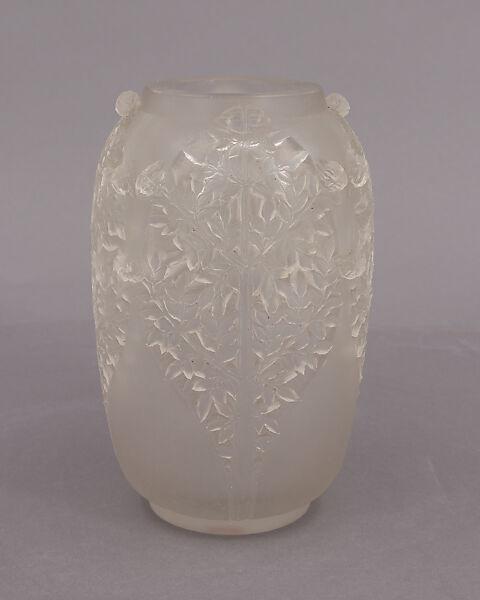
René Lalique, frosted glass vase with botanical relief, 1929
Swarovski and Precision-Cut Crystal
Founded in Austria in 1895, Swarovski became known for precision-cut manufactured crystal glass. Its success was closely associated with innovations in cutting technology and the ability to produce consistently brilliant decorative elements. The resulting products became important in jewellery, fashion, lighting and interior decoration. Swarovski crystal is manufactured crystal glass, not natural quartz. Its optical qualities are achieved through the composition of the glass and the precision of its cutting and polishing. Natural rock crystal presents a different challenge. Its dimensions, internal features and structural characteristics have already been determined by geological processes. The craftsperson must work within those conditions.
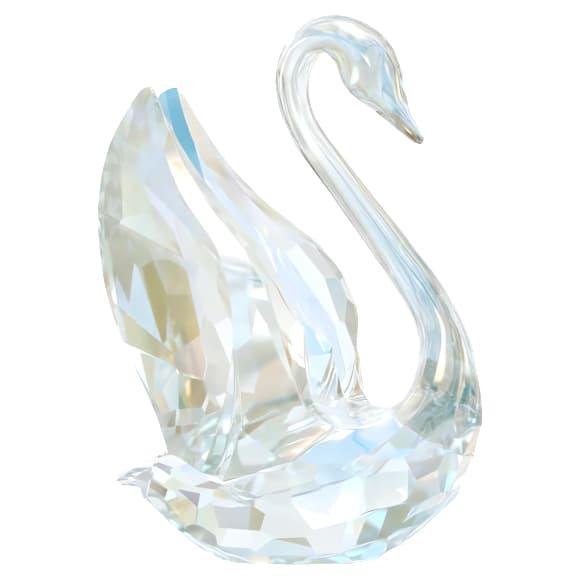
Swarovski Swan, 2024. Designed by Martin Zendron, the manufactured crystal glass sculpture features 236 precisely cut facets.
Bohemian Crystal Glass and the Tradition of Czech Glassmaking
Bohemian crystal has its own long history of glassmaking in the region now within the Czech Republic. Historic potash-lime glass could be cut and engraved with remarkable precision. Its ingredients were melted and formed before decoration, while rock crystal must be shaped from a geological specimen.
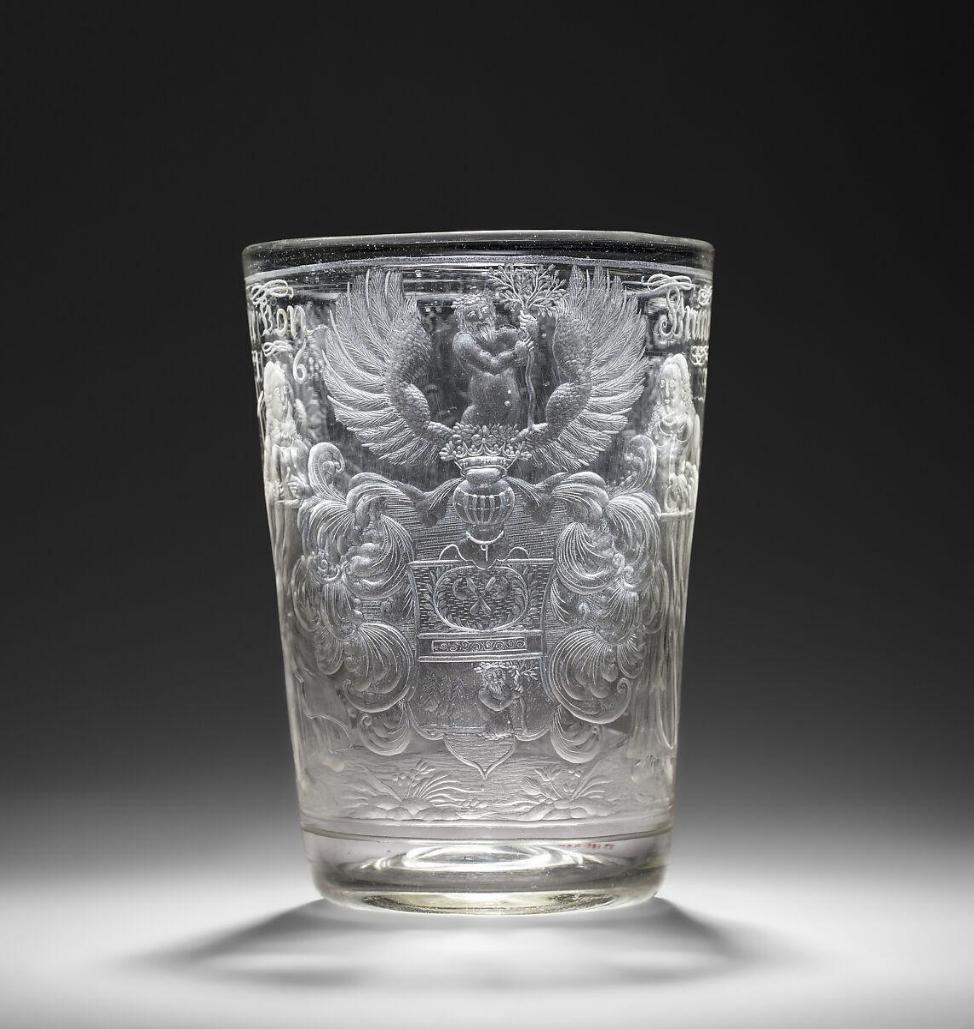
Bohemian engraved glass beaker bearing the arms of the Klinkebiel von Grünewald family, 1690
De Ferranti's Glass Crystal Tile & Lighting Collection presents related glass traditions; the shared word crystal should not, however, obscure the difference in composition and manufacture.
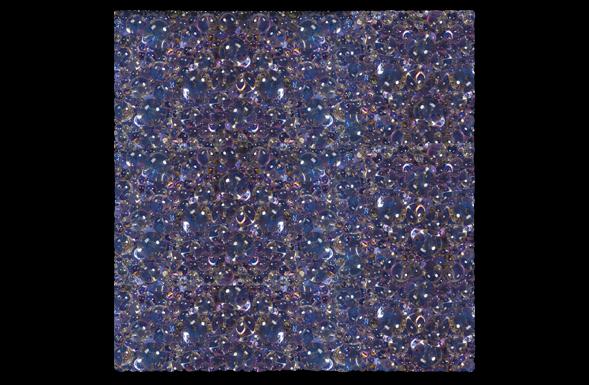
De Ferranti’s decorative glass tiles
On the one hand, a designer specifying a repeated decorative element may value the precision and consistency of manufactured crystal glass; on the other, a collector commissioning a sculptural object may instead seek the unique internal character of a natural rock crystal.
For architects and interior designers, distinguishing between these materials is essential when evaluating provenance, fabrication, maintenance, weight and technical performance. It is also important when interpreting historical objects. The terms rock crystal, crystal glass, lead crystal and quartz should be used accurately rather than interchangeably.
From Raw Block to Finished Object in the De Ferranti Artisans’ Workshops
Each block presents a distinct arrangement of fractures, inclusions and clear zones. A solid carving preserves continuity through the mineral, but its form has to fit within sound material. An artisan positions a basin, vessel or sculpture to balance appearance, safe wall thickness and usable yield.
Diamond tooling and abrasives remove material gradually; heat, vibration and local stress must be controlled. Hollow forms involve the further risk of removing a large volume while retaining a continuous shell. Grinding and polishing determine how much of the interior can be seen: a rough surface scatters light, while a fine polish reveals depth
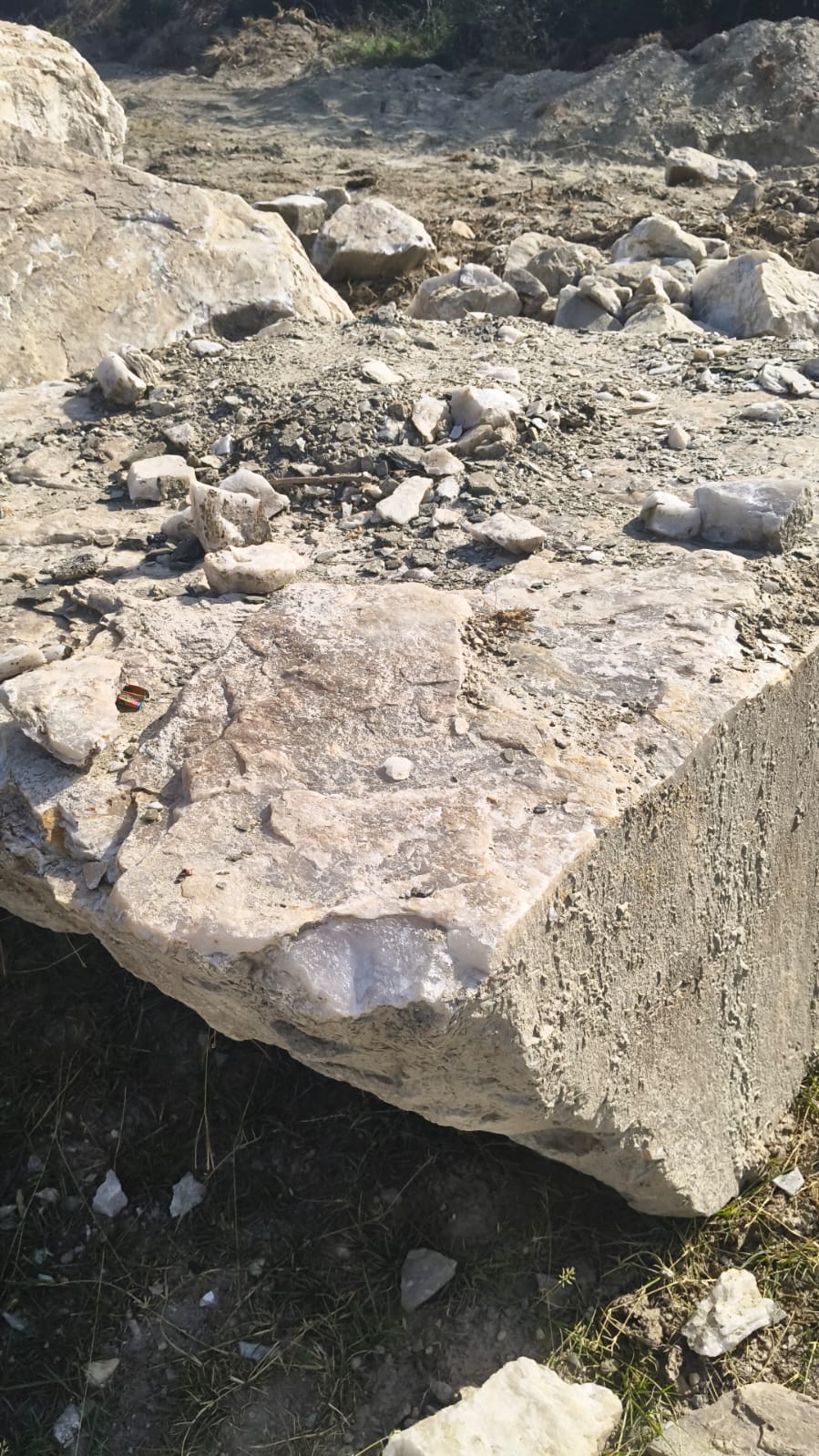
A rough rock crystal block yet to be fully unearthed at the quarry
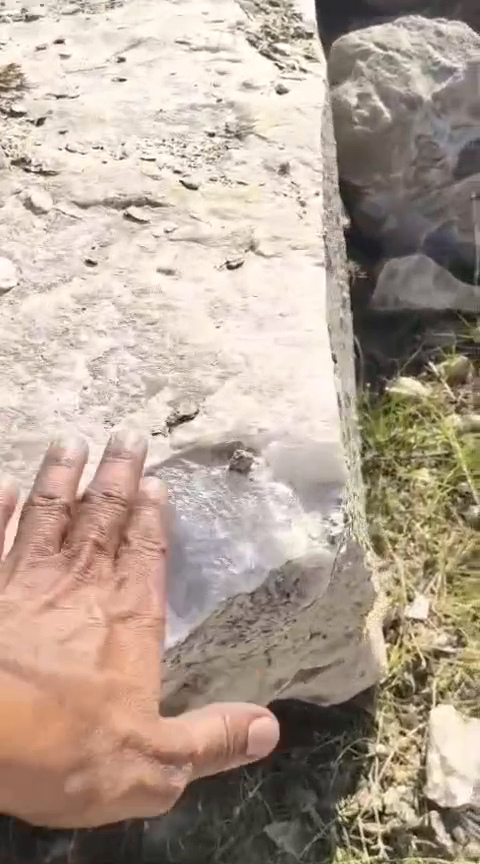
A close view of exposed rock crystal quartz, with a hand providing a sense of scale
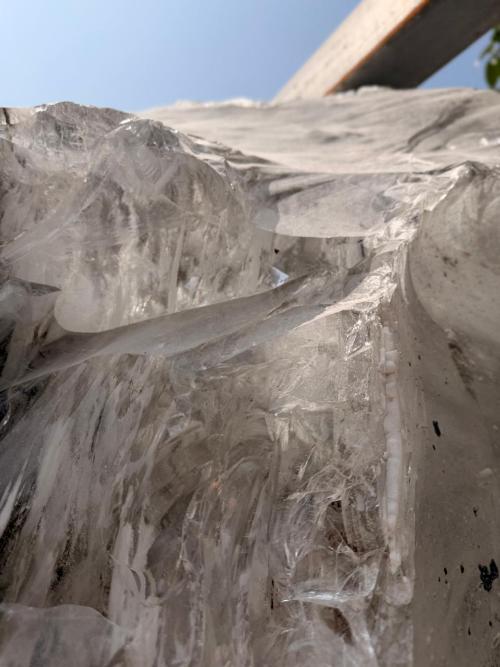
A large rough crystal block prior to carving, De Ferranti artisans’ quarry
In the workshops of De Ferranti's specialist artisans, the craftspeople who examine and select a block also cut, carve and polish it. Their decisions begin before the first irreversible cut: orientation, fractures, desired clarity and the volume that can remain all affect the design. A basin requires a different distribution of sound material from an obelisk or screen component. As cutting exposes more of the interior, the artisan may adjust thickness and finish. Access to selected blocks and the workshop's fabrication knowledge helps designers test feasibility early.
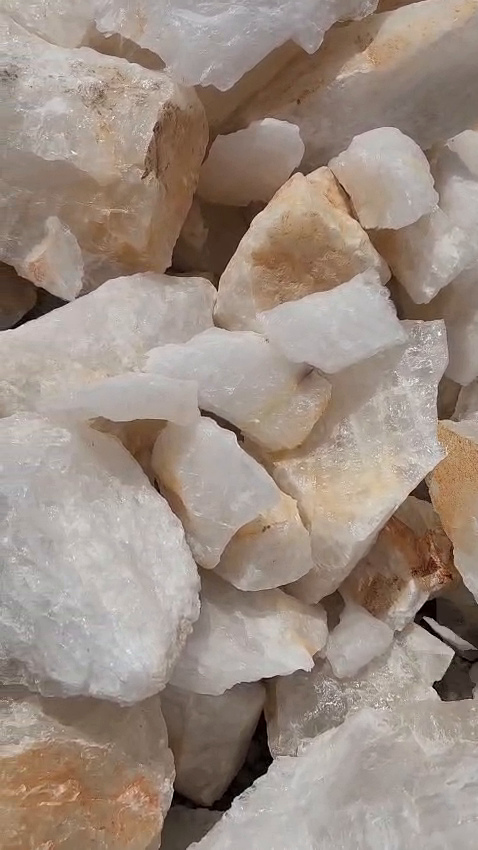
Rough rock crystal quartz pieces before selection and further shaping
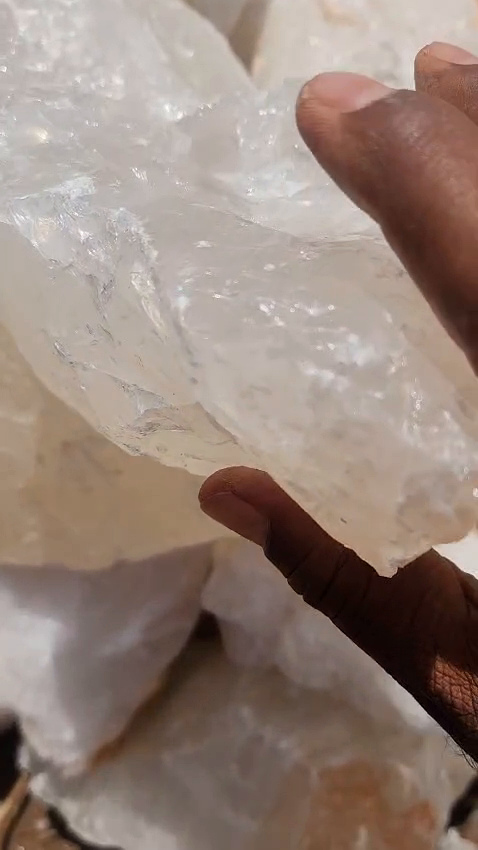
A translucent piece of rough crystal revealing natural veils and fractures
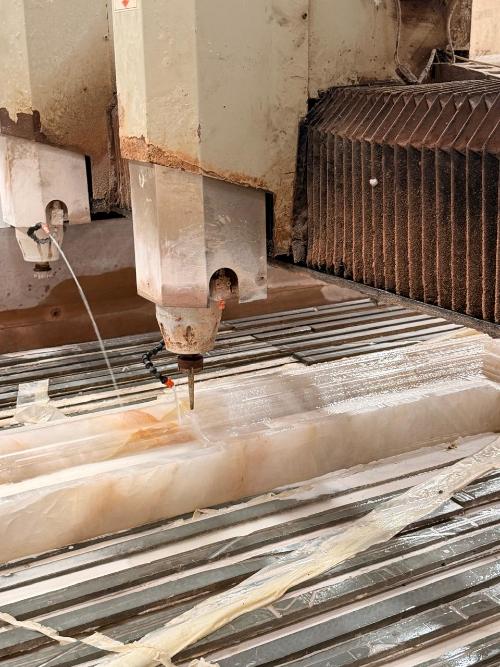
Rock crystal being machined into a fireplace at the De Ferranti artisans’ workshop
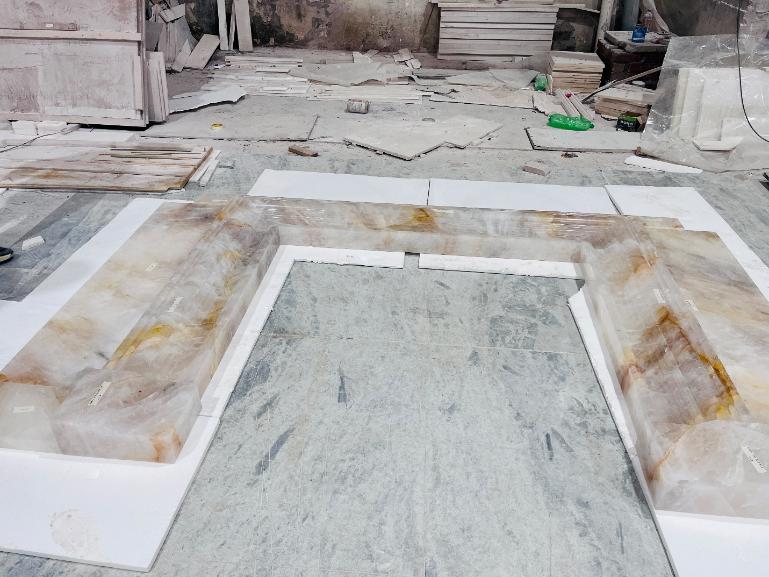
Rock crystal fireplace surround after fabrication, De Ferranti
Natural Fractures and Resin Treatments
Natural fractures are among the principal challenges encountered during rock crystal fabrication. Some are immediately apparent. Others become visible only after cutting or polishing has begun. Their presence does not necessarily render a block unusable, but it may influence the dimensions, orientation or intended use of the finished piece.
Specialist resins can sometimes be employed to fill or stabilise selected defects. Such treatments require careful consideration. A resin suitable for a decorative sculpture may not be appropriate for a basin, heavily loaded component or surface exposed to prolonged moisture. Its optical appearance, ageing characteristics and compatibility with the surrounding material must be evaluated. A repair that appears unobtrusive under ordinary lighting may become apparent when the object is illuminated from behind. Resin treatment should therefore be understood as a specialist fabrication technique, not a universal solution to the challenges presented by natural stone.
A resin-bound surface incorporating crystal fragments is a composite, with different properties from solid quartz. Its performance depends on the matrix, crystal content, bonding and fabrication method. Such a system may offer controlled patterns or a larger decorative area, but requires its own evidence for staining, heat, moisture and maintenance. Material yield also affects cost, as a large raw block can produce a much smaller basin or hollow vessel once fractured areas and the cavity are removed. Early discussion with the fabricator helps establish achievable dimensions and whether a solid or assembled construction serves the design.
De Ferranti’s Rock Crystal Collections
The history of rock crystal demonstrates that its appeal has never depended solely on transparency. Its capacity to carry symbolic meaning, reflect cultural traditions and respond to skilled craftsmanship has made it an enduring medium for decorative art. In contemporary interiors, carved rock crystal objects can provide sculptural focal points, introduce contrasting materials or establish connections with historical artistic traditions. Their scale ranges from small decorative pieces to substantial works intended for architectural settings.
Within De Ferranti's Objects of Desire & Curiosities, rock crystal is explored through vessels, botanical forms, sculptural interpretations and functional components.
The Rock Crystal Ibis
In ancient Egyptian religious and artistic traditions, the ibis was associated with Thoth, the deity connected with writing, knowledge and wisdom. Its distinctive form appears in numerous surviving works, including sculptures and votive objects.
At De Ferranti, our rock crystal Ibis draws on ancient Egyptian ibis imagery. The contemporary interpretation combines a carved crystal body with contrasting metal elements. Its transparency introduces a visual quality different from that of historical inspiration. The crystal body allows light to enter the sculpture, revealing the mineral's internal characteristics, while the metalwork defines the bird's distinctive silhouette.
Ibis in brass and rock crystal, by De Ferranti
Botanical Forms and the Language of Nature
Rock crystal lends itself particularly well to objects inspired by botanical forms, and De Ferranti's rock crystal collection includes exquisite items such as the rock crystal lotus tealight holder and the tulip tea-light holder in which carved crystal petals interact with light.
The lotus has a long history of symbolic and decorative use across several cultures. Its layered petals and recognisable silhouette lend themselves to interpretation in translucent materials. In a carved crystal tea-light holder, illumination becomes part of the design. The object changes in appearance according to its surroundings, the direction of light and the natural characteristics of the indiworkshopvidual crystal.
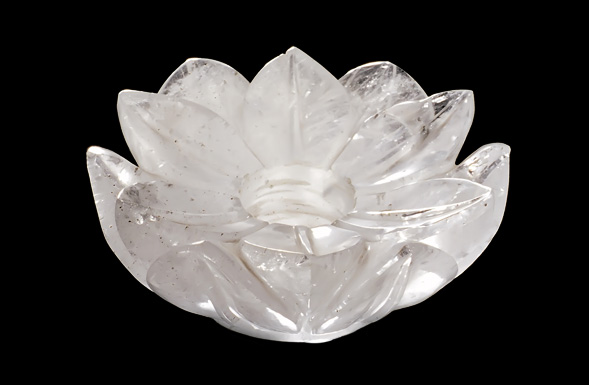
Carved rock crystal lotus tea-light holder, by De Ferranti
The Rock Crystal Vessel
Another expression of the material's versatility is the carved vessel. The De Ferranti Rock Crystal Vessel occupies a position between sculpture and functional object. Its character derives largely from the natural mineral itself. Rather than concealing internal veils and inclusions, the carved form allows these features to contribute to the object's appearance; as light moves across its polished surfaces, different areas of the crystal become more or less apparent.
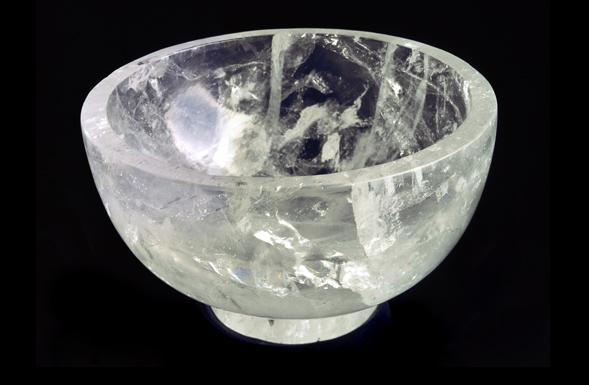
Rock crystal vessel, showing the finished form, by De Ferranti
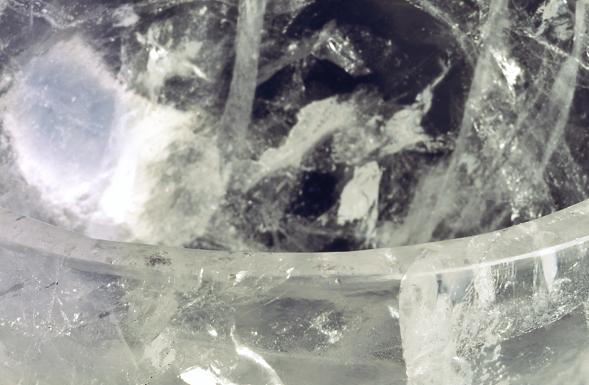
A detail of the vessel’s natural veils and polished surface, by De Ferranti
The same principles can be extended to larger commissions. De Ferranti's experience includes obelisks, sculptural heads , carved figures, skulls and other ornamental forms. Such objects may draw inspiration from historical artefacts, religious iconography, natural forms or contemporary sculptural ideas. The selection of rock crystal introduces a distinctive relationship between exterior form and internal structure.
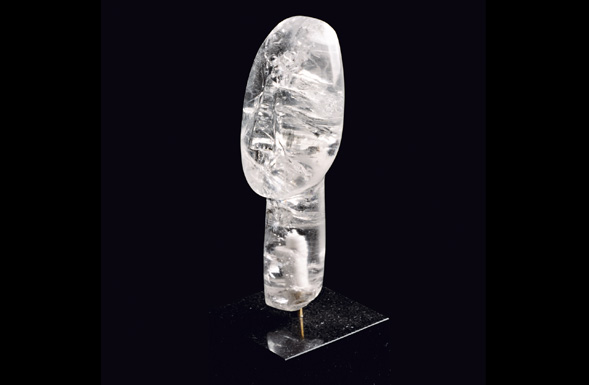
Cycladic-inspired sculptural head in rock crystal, by De Ferranti
Jean-Michel Frank and Modern Interiors
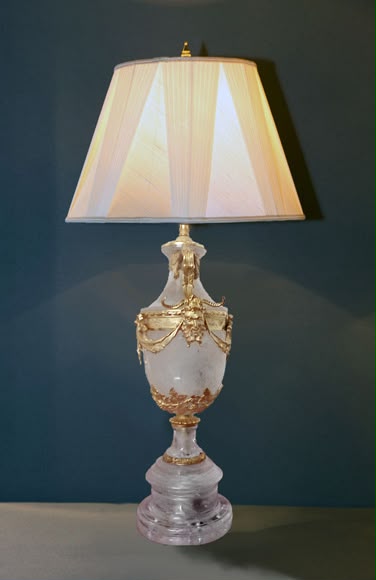
Rock crystal and gold guilded lamp base, by De Ferranti
The French designer Jean-Michel Frank provides an important twentieth-century precedent. Associated with an understated yet materially sophisticated approach to interior decoration, Frank frequently employed unexpected combinations of simple forms and exceptional materials.
Rock crystal was particularly well suited to this philosophy, and rather than always transforming the mineral into elaborate decorative forms, Frank sometimes retained much of its natural appearance.
Among Frank's documented designs are table lamps incorporating substantial pieces of natural rock crystal. Examples from the interwar period demonstrate how he combined rough or minimally worked crystal with carefully considered lighting components. The contrast between the mineral's irregular natural form and the controlled geometry of the surrounding interior was central to their appeal. In such objects, rock crystal serves as both a functional component and a sculptural presence. Its natural characteristics become part of the composition rather than imperfections to be removed.
Basins, Baths and Architectural Details
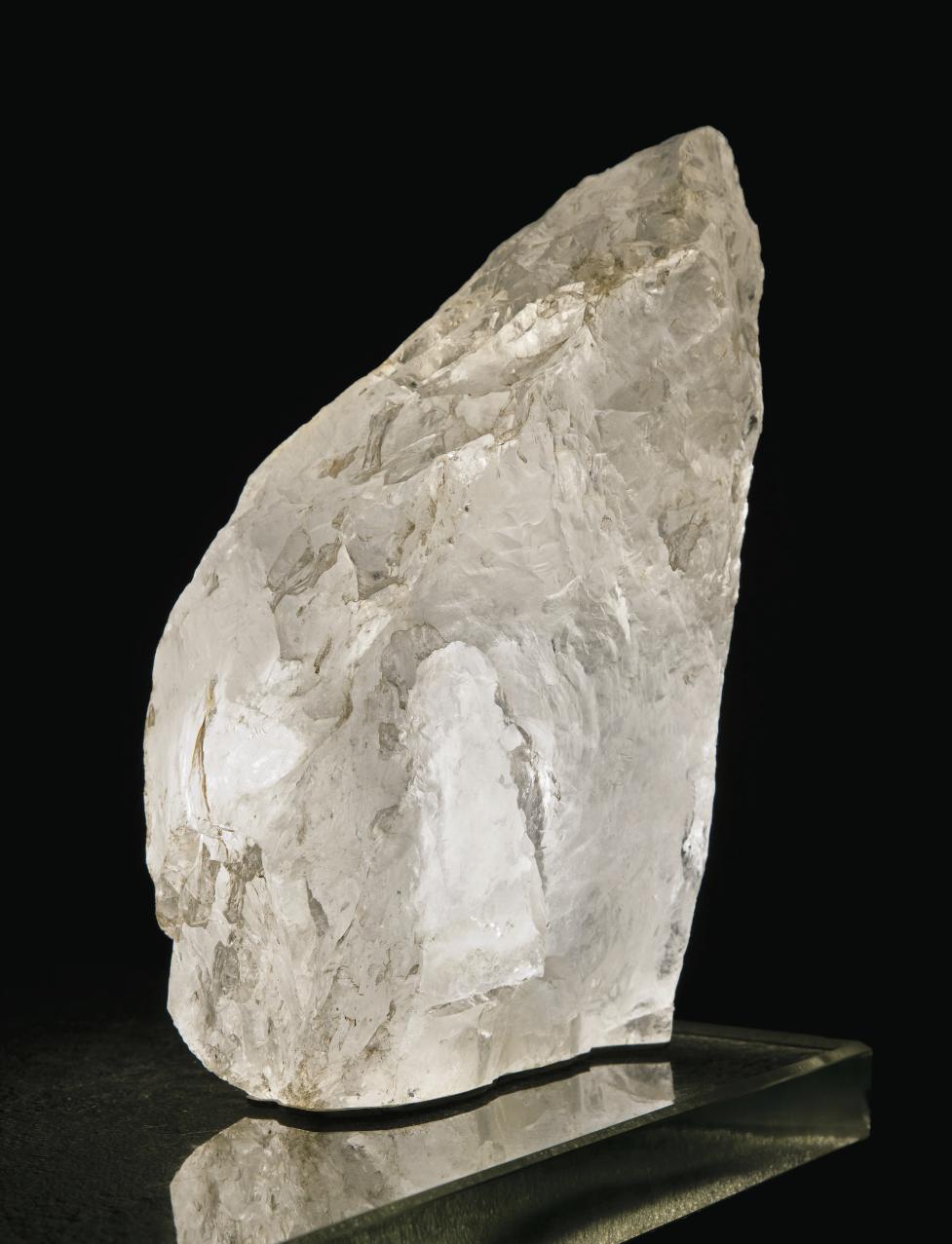 Rock crystal lamp base by Jean-Michel Frank, circa 1926. Formerly in the collection of Yves Saint Laurent and Pierre Bergé
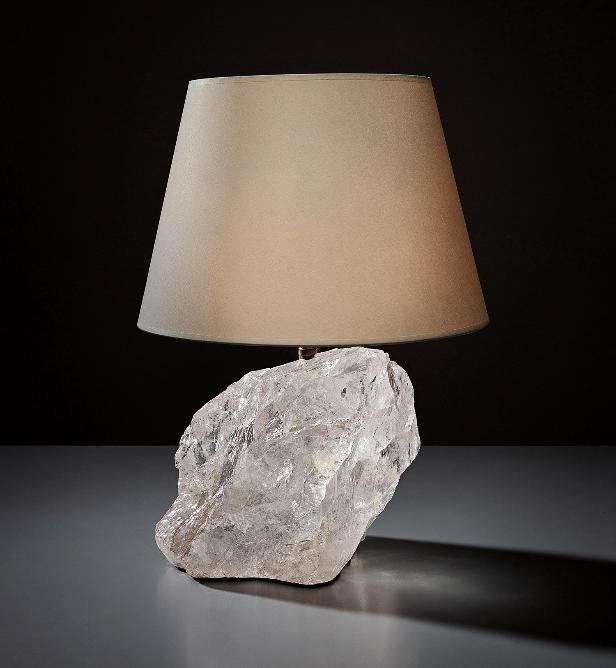
Jean-Michel Frank table lamp with a natural rock crystal base
Although rock crystal has a long history as a decorative material, its use in contemporary architecture introduces a different set of possibilities and challenges. Larger components require greater attention to weight, structural support, fabrication tolerances and installation. They also allow the material to be experienced at a scale that would have been unusual in many historical settings. A rock crystal basin brings the mineral into everyday architectural use, whereas a monumental crystal bath can transform an entire bathroom into a setting for a sculptural object.
De Ferranti’s Solid Rock Crystal Basin
The De Ferranti Rock Crystal Basin demonstrates how natural crystal can be employed in a functional bathroom setting. Carved from solid rock crystal, the basin allows the mineral's transparency and internal characteristics to remain visible. Its polished surfaces reveal natural veiling and inclusions, while the curved form introduces changes in thickness that influence the passage of light. The object demonstrates how a functional fitting can also be conceived as sculpture. However, the technical considerations differ from those associated with a purely decorative vessel. The basin must accommodate plumbing connections, water exposure, cleaning and repeated use. Its weight must be supported by the surrounding furniture or architectural structure. The design must also consider the relationship between the crystal and adjacent materials.
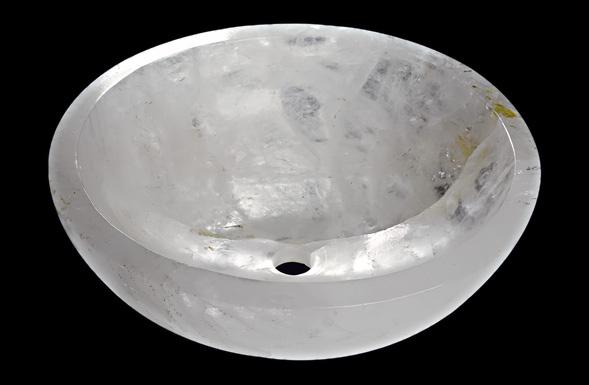
Solid rock crystal basin with an exposed mineral surface. Photograph: De Ferranti.
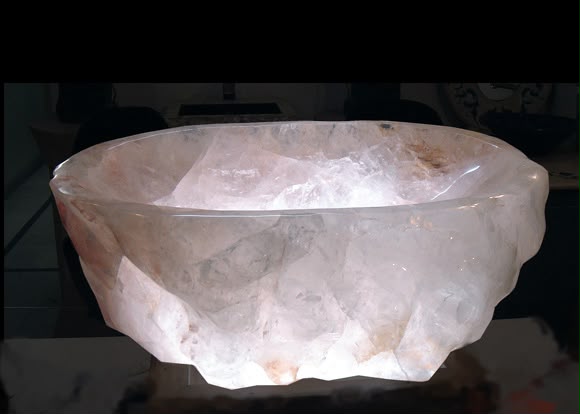
Faceted rock crystal basin, by De Ferranti
The Baldi Rock Crystal Bath
One of the most remarkable modern examples of large-scale rock crystal fabrication was produced by the Italian company Baldi. Contemporary reports describe a Baldi rock crystal bath displayed at Harrods in London in 2010.
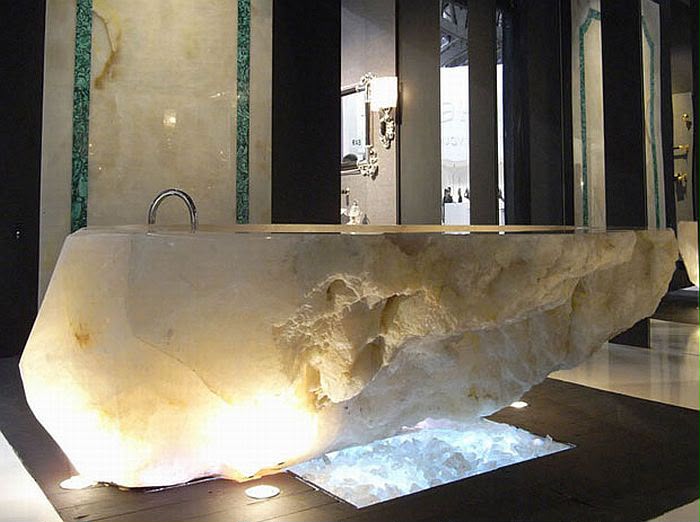
Baldi solid carved rock crystal bath
A bath carved from a single substantial crystal requires the integration of geological selection, transport engineering, precision cutting, hollowing, polishing and installation planning. Every stage presents potential difficulties. The finished object must also perform its intended function. Its weight, support, drainage, water exposure and maintenance requirements cannot be separated from its sculptural qualities.
Speak crystal is typically carved into objects such as the baldi bath above however modern technology can also allow us to piece together pieces of crystal set into resin to create large objects such as the bath shown below these can be backlit add cost into a variety of shapes and sizes. Many translucent materials such as agates and rose quartz can also be used in this manner. But write it down it's basically it's just to distinguish between
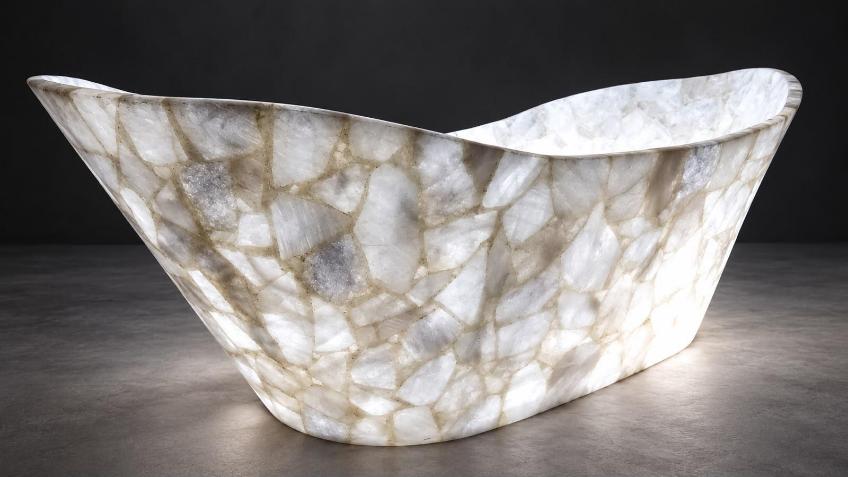
Bath formed from rock crystal set in resin, frontal view, by De Ferranti
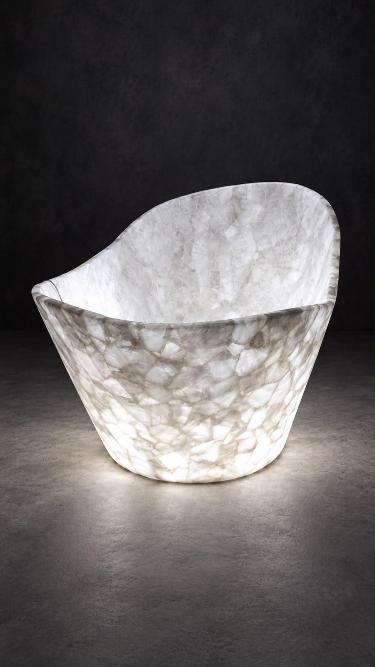
Bath formed from rock crystal set in resin, front view, by De Ferranti
Architectural Details and Functional Components
Beyond baths and basins, rock crystal can be fashioned into smaller architectural components, and at De Ferranti, we have produced crystal rosettes for balustrades, as well as decorative fittings and carved elements intended for incorporation into larger architectural compositions.
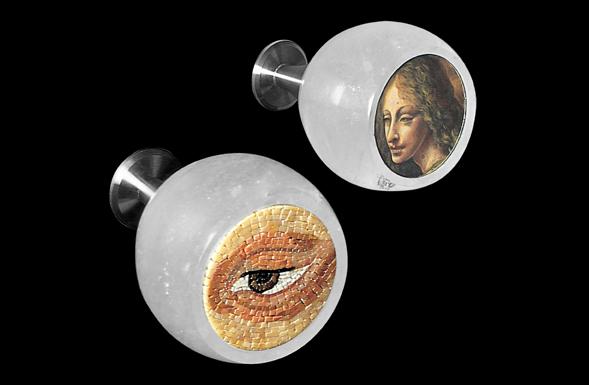
Rock crystal door pulls with figurative micro mosaics, by De Ferranti
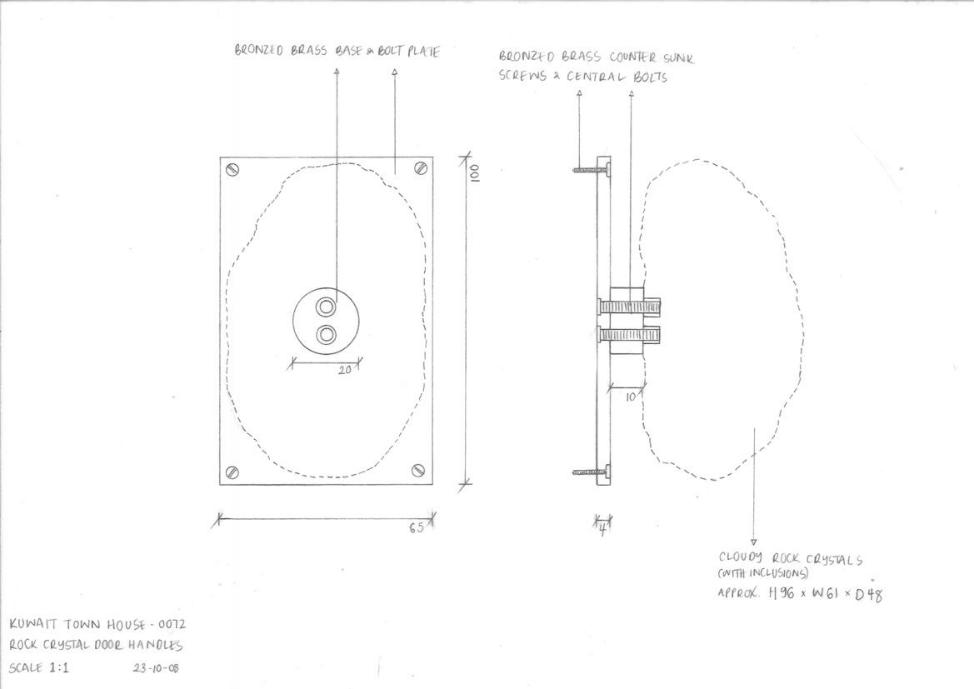
Architectural drawing for rock crystal door pulls, by De Ferranti
The collection also includes a rock crystal ammonite tap head, demonstrating how the material can be applied to a functional architectural fitting. Such components introduce transparency and luminosity into otherwise opaque assemblies.
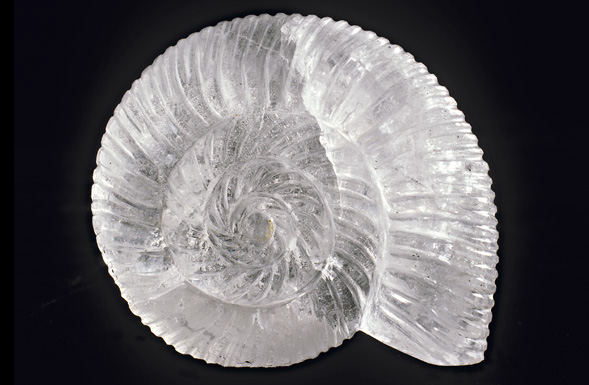
Rock crystal ammonite tap head, by De Ferranti
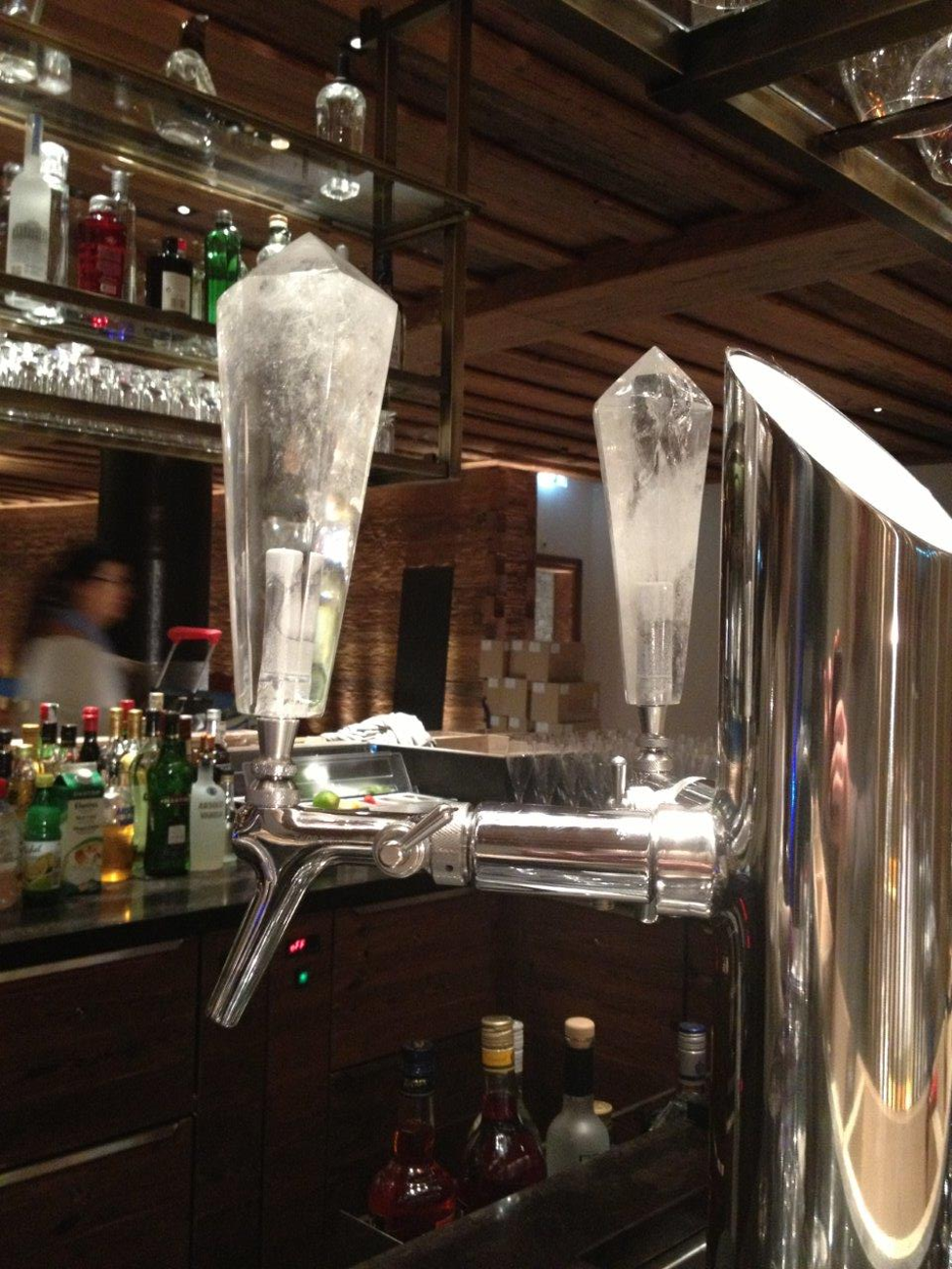
Rock crystal beer taps, by De Ferranti
A crystal rosette may provide a striking visual contrast against metal or stone, and its success depends on the relationship between the component, its fixing system and the surrounding architectural detail. Where rock crystal forms part of an assembly subject to structural loads, the load-bearing design must be independently assessed.
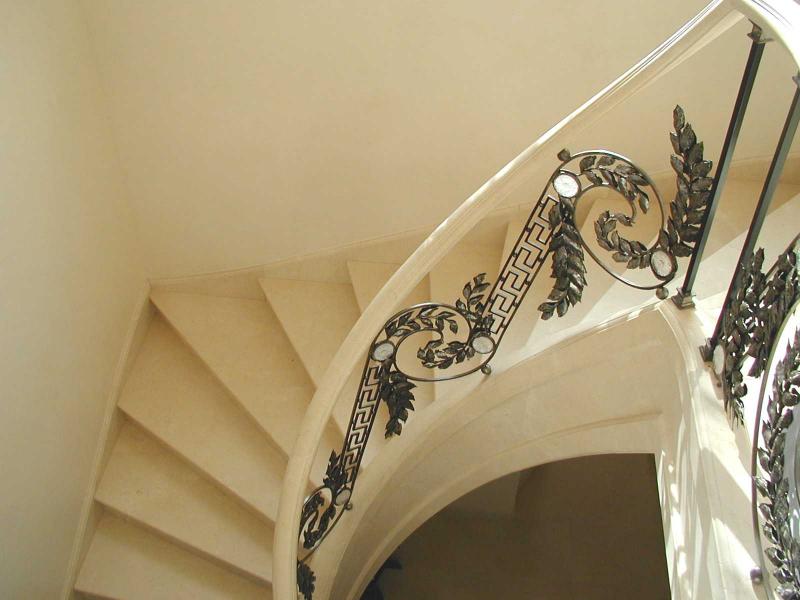
Custom metal staircase with rock crystal rosette accents, by De Ferranti
Screens, Crystal Wands and Jali
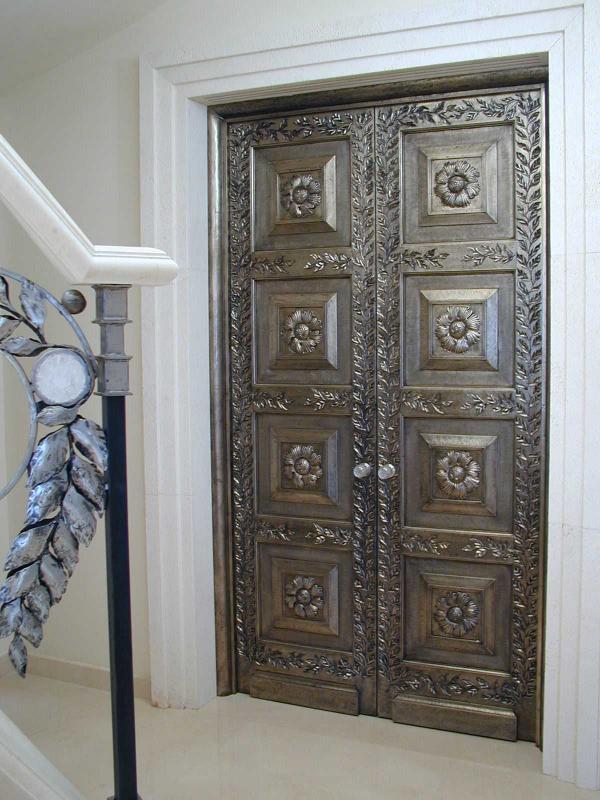
Rock crystal rosette close-up set into a staircase balustrade, alongside hammered, beaten and cast German silver doors with rock crystal handles.
One of the more unusual applications of rock crystal is its use in decorative screens and spatial dividers. Traditional architectural screens have long provided a means of defining space without necessarily enclosing it. In Islamic and South Asian architecture, pierced stone and timber screens have been employed to filter light, provide privacy and introduce ornamental pattern. Contemporary designers continue to explore these principles through new materials and manufacturing techniques. Rock crystal offers a particularly interesting possibility because it can transmit light through the body of the material itself.
Rock Crystal Wands
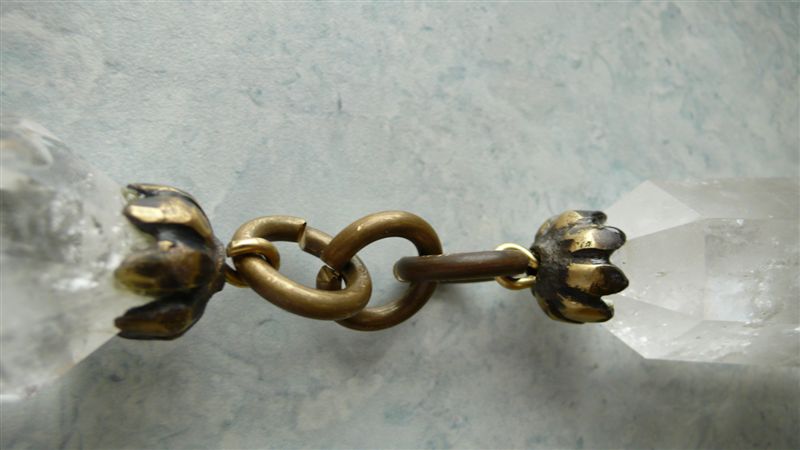
De Ferranti has developed screens incorporating elongated pieces of rock crystal, described as crystal wands. These may be arranged vertically to create translucent backdrops, partitions or decorative installations. Unlike a conventional beaded curtain, a composition of substantial crystal wands possesses a pronounced sculptural quality. The individual elements have weight, depth and natural variation. Their transparency allows light to pass through the installation, while internal veiling and surface reflections interrupt direct views.
Spacing, orientation and thickness determine how much a crystal wand screen interrupts sightlines; side lighting catches edges, while backlighting softens veiled material.
Rock Crystal Jali Screens
Crystal can also be set into a jali-inspired supporting frame, with a pattern developed from discrete elements. The framework, fixing points and cleaning access must be designed for the weight of each piece and the risk of accidental impact. Any required fire, acoustic, structural or impact performance belongs to the complete assembly and needs project-specific evidence.
Rock Crystal, Metal Filigree and Light
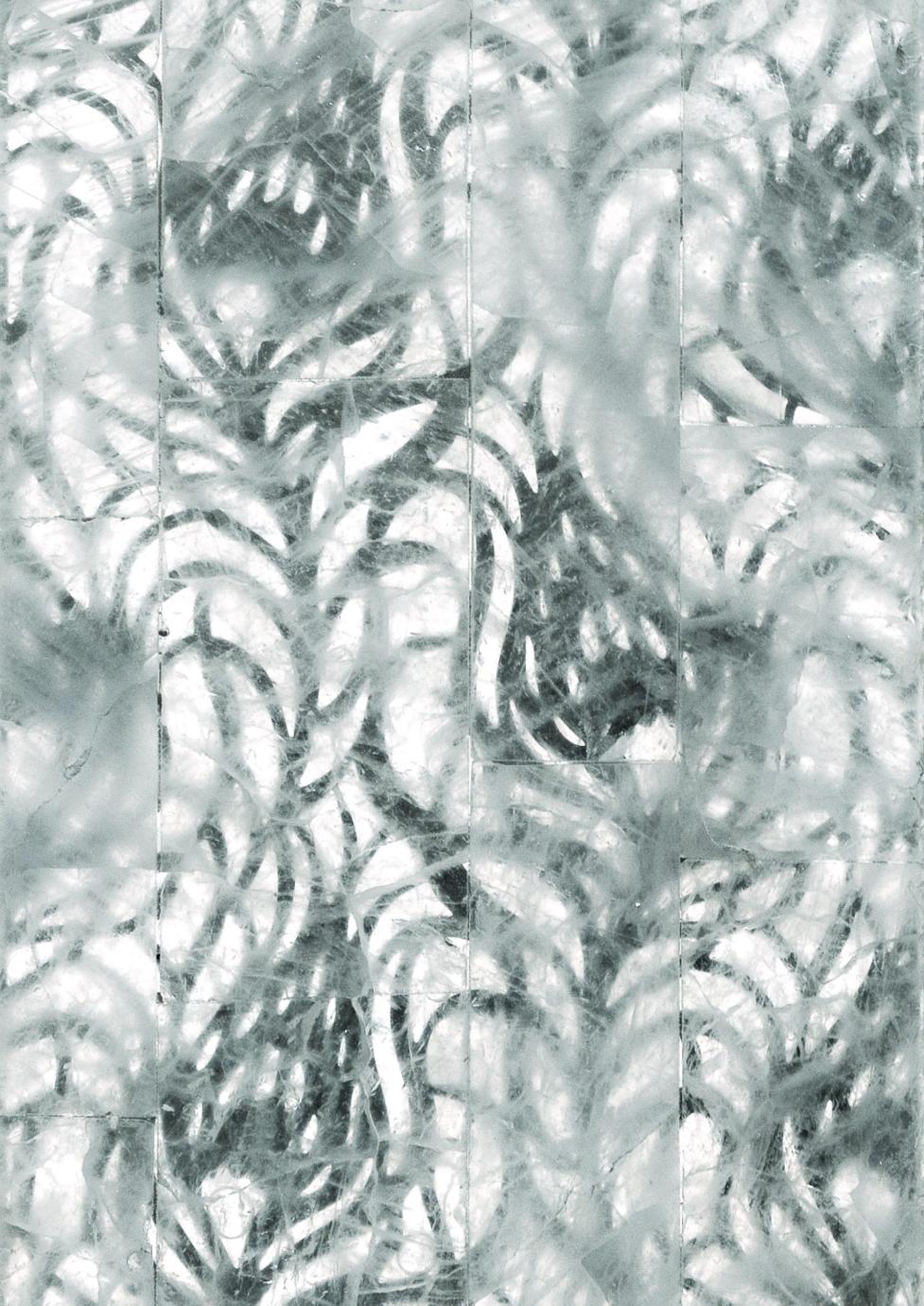
Rock Crystal Jali panel, De Ferranti
Light is central to the appeal of rock crystal. Unlike an opaque decorative stone, whose appearance is determined primarily by reflected light, rock crystal can also transmit and refract light through its body. The effect depends on clarity, thickness, surface finish and the internal characteristics of the individual piece. A transparent crystal may reveal objects positioned behind it. A heavily veiled specimen may transmit light while obscuring detail. A polished surface may produce distinct reflections, while a roughened or textured surface scatters light more broadly.
Metal Filigree
One particularly distinctive approach developed within De Ferranti's decorative work involves positioning finely worked copper or brass filigree behind rock crystal. Rather than applying ornament directly to the visible surface, the metalwork sits behind it, creating the impression of pattern suspended within or beyond the crystal. The effect is influenced by the clarity and thickness of the quartz, the complexity of the metalwork and the distance between the decorative layers. Highly transparent crystal may reveal the filigree with considerable definition. More translucent material can soften the pattern, giving it a less distinct, almost atmospheric quality. The metal itself introduces further possibilities. The finish of the metalwork is equally significant, as polished, brushed, patinated or darkened surfaces interact differently with transmitted and reflected light.
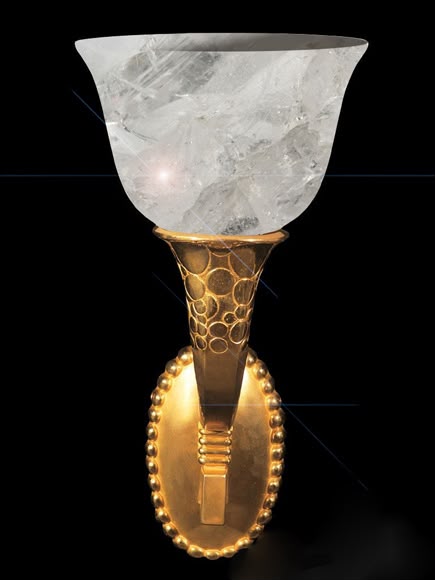
Rock crystal wall light with gilt metal detail, by De Ferranti
The Importance of Layering
Instead, decoration can be positioned behind a transparent or translucent material, allowing the viewer to perceive several visual planes simultaneously. It also allows different materials to contribute distinct qualities to the composition. The crystal provides transparency, internal character and a polished exterior. The metalwork introduces pattern, colour and intricacy. The supporting structure provides stability and allows the assembly to be integrated into the architecture.
Backlighting Rock Crystal
Backlighting can reveal veils and inclusions that are scarcely visible in daylight. Crystal rarely diffuses light evenly, so direct LED points and harsh variations in brightness should be addressed through a lighting cavity, diffusion and careful placement. Designers should examine representative pieces under the intended colour temperature and dimming conditions. Warm light can strengthen the visual connection with brass or copper; cooler light may favour a paler appearance. Provide access to maintain the lighting, and check heat and ultraviolet exposure where resins are present.
Pietra Dura Beneath Rock Crystal
Among the most imaginative applications of rock crystal is its use as a transparent layer above decorative stone inlay. This approach combines two distinct traditions of craftsmanship. The first is pietra dura, or pietre dure, the art of creating pictorial compositions from carefully selected and precisely cut pieces of coloured hardstone. The second involves the arrangement of rock crystal to introduce optical depth above the underlying composition.
Together, these techniques can create decorative surfaces that appear to contain multiple layers of visual information. Pietra dura has long been associated with elaborate decorative compositions depicting flowers, birds, landscapes and other subjects.
The technique relies on the careful selection of stones whose natural colours and markings contribute to the intended image. A flower petal may be represented by a particular shade of jasper. A leaf may be formed from green stone selected for its tonal variation. The success of the composition depends on the precision of the cutting and the sensitivity with which individual materials are arranged.
A lily pond tabletop can place cut stone lotus flowers, lily pads and koi carp beneath rock crystal. Across its surface, carefully cut hardstones form floating lily pads, lotus flowers and koi carp moving beneath the water.
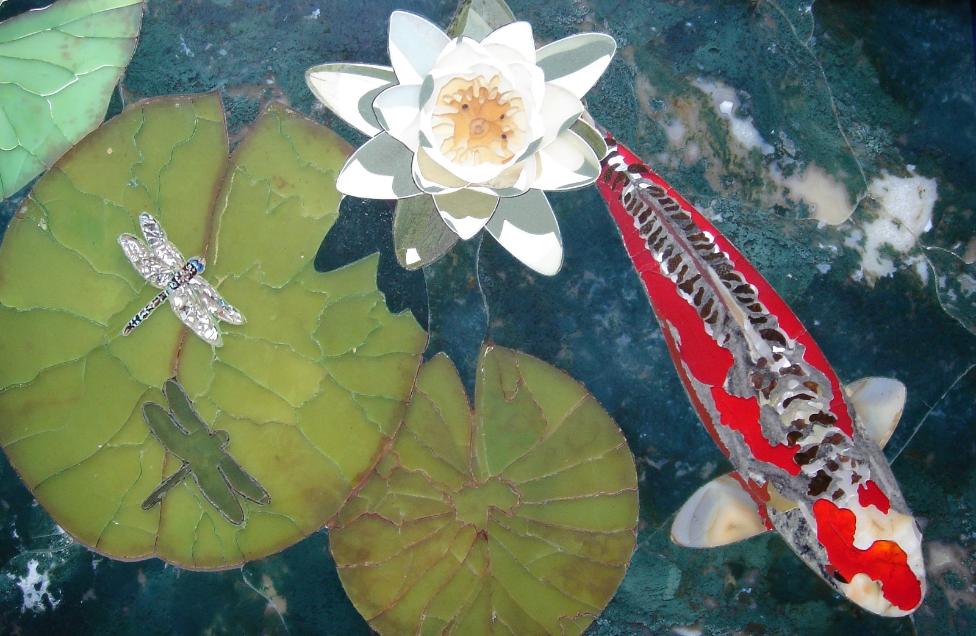
Section of a pietre dure table top depicting a pond with lotus, lilly pad, dragon fly & koi carp overlaid with rock crystal, by De Ferranti
Ordinarily, the finished inlay would be viewed directly. However, by positioning carefully fashioned pieces of rock crystal above the composition, a further visual dimension can be introduced. The transparent crystal creates a physical separation between the viewer and the underlying image. Its internal veils, surface reflections and variations in thickness alter the way the inlay is perceived. The effect is reminiscent of looking through water or beneath the surface of a frozen pond. The underlying stone composition remains visible, yet appears to occupy a different visual plane.
Opus Sectile and Crystal Overlays
Opus sectile describes compositions assembled from cut pieces of stone or other materials. The pictorial hardstone inlay may be described as pietra dura; its crystal covering is a separate arrangement of cut and polished elements. A layered tabletop needs an appropriate substrate and a retention or bonding method compatible with both materials. Adhesive clarity, curing, ageing and visible seams affect the appearance. Variation in crystal thickness may enhance depth, but a usable surface also needs controlled levels, protected edges and a considered cleaning and impact strategy. The finished piece should be assessed as an assembly.
The same principles can be applied to decorative wall panels, furniture, illuminated compositions and other bespoke architectural features. Rock crystal becomes a means of separating visual layers, introducing depth and changing the way an underlying image is perceived.
Specifying Rock Crystal
The successful specification of rock crystal begins with an understanding that it is a natural material whose appearance and technical behaviour vary from piece to piece. Unlike a standard manufactured finish, a substantial crystal may possess characteristics that cannot be replicated precisely. This individuality is often desirable, but it also requires careful coordination between the designer, artisan, fabricator and installation team.
Establishing the Intended Application
The first consideration is the role the crystal will perform. A decorative sculpture has different requirements from a basin, tabletop, wall panel or architectural screen. The anticipated frequency of use, exposure to moisture, risk of impact and proposed lighting conditions should all inform the selection of material.
A backlit feature may prioritise optical clarity and light transmission, while a frequently used horizontal surface requires greater attention to edge detailing, durability and maintenance. A substantial suspended installation introduces additional considerations of weight, structural support and fixing arrangements.
The intended application and environmental conditions should therefore be established before dimensions, material selection and fabrication methods are finalised.
Material Selection and Approval
Specifying natural rock crystal is not simply a matter of choosing its geological origin. Individual blocks from Brazil, India or Madagascar can differ considerably in clarity, veiling, inclusions, fractures and usable dimensions. Provenance may provide useful background, but the suitability of the actual material is considerably more important.
For significant commissions, we recommend examining and approving the selected block or individual pieces, recording their origin where documented, dimensions, visual characteristics and acceptable natural variations. The specification should also identify whether the crystal is untreated or has undergone filling, impregnation or other stabilisation treatments.
Fractures that contribute to the material's appearance must be distinguished from those that could compromise thin sections, fixing points or structural integrity. A naturally occurring inclusion may be entirely acceptable within a sculptural object, yet unsuitable where it intersects a critical connection or load-bearing element.
The orientation of the intended object within the block should be agreed with the artisan before irreversible cutting begins, allowing the finished form to respond to the material's natural characteristics and usable volume.
Solid Crystal or Composite Construction?
Solid rock crystal offers continuity of material and exceptional optical depth, but the dimensions of available blocks, natural fractures and material yield can restrict its use.
Composite systems, incorporating crystal fragments within a resin or other binding matrix, offer alternatives for larger decorative surfaces and complex forms. However, their performance depends as much on the binder, crystal content and fabrication method as on the mineral itself.
Designers should establish the composition of any proposed composite and request appropriate technical information concerning water absorption, impact resistance, dimensional stability, staining, chemical compatibility and, where relevant, ultraviolet exposure and ageing.
Particular attention should be given to adhesives, resins and bonded interfaces. In transparent or translucent materials, an otherwise unobtrusive adhesive line, trapped air pocket or colour change may become visible through the crystal, particularly under illumination. Compatibility with adjoining stone, metalwork and other materials should therefore be assessed before fabrication.
Solid and composite crystal should not be specified interchangeably. Each construction method offers distinct aesthetic possibilities, but must be evaluated according to its intended use and performance requirements.
Dimensions, Support and Installation
Finished dimensions and tolerances must be agreed in relation to the selected block, the proposed fabrication process and the surrounding architectural assembly. A naturally irregular exterior may be desirable, while adjoining metalwork, joinery, plumbing connections and fixing points require accurately controlled interfaces.
With a density of approximately 2,650 kilograms per cubic metre, substantial crystal components can be unexpectedly heavy. Their brittleness also makes edges, drilled holes, notches and concentrated loading particularly vulnerable. Critical thicknesses, bearing surfaces and fixing positions should therefore be established during the design process rather than left to site adjustment.
For large, suspended or structurally demanding installations, the complete supporting arrangement, including anchors, metalwork, subframes and the supporting building structure, should be assessed by an appropriate specialist. Fixings must be selected with consideration for the strength of the crystal itself, not simply the capacity of the metal components.
Handling and installation deserve equally careful planning. The finished weight, lifting equipment, access routes, protection measures and installation sequence should be confirmed before delivery. An exceptional piece of crystal may require specialist handling arrangements that influence the design of the surrounding architecture.
Wet Areas and Sanitary Applications
Rock crystal basins and baths require particular consideration of their intended environment and frequency of use. Drainage, waste fittings, overflow provisions where appropriate, sealing and supporting structures must be coordinated with the actual carved form.
Natural fractures, resin treatments, adhesives and bonded components should be assessed for prolonged moisture exposure. Particular attention is required at drilled openings, joints and plumbing connections, where localised stresses or incompatible sealants may compromise the finished assembly.
A basin intended for occasional use in a private powder room may present different requirements from one installed in a frequently used bathroom or hospitality setting. The anticipated conditions of use should therefore inform decisions concerning material selection, construction and maintenance.
Although quartz itself is relatively resistant to many everyday substances, cleaning instructions must address the complete assembly, including any resins, adhesives, metal finishes and sealants. Appropriate guidance on cleanability, durability and the maintenance of fittings should be established before approval, rather than relying solely on the mineral's general properties.
Lighting, Surface Finish and Mock-Ups
Lighting should be developed alongside the material specification. Transparency, internal veiling, thickness and surface finish all influence how crystal transmits and diffuses light, and two specimens can produce markedly different effects.
For illuminated installations, representative pieces should be examined under the intended lighting conditions, including colour temperature, diffusion, brightness and dimming. Particular attention should be given to visible LED points, uneven illumination, shadows from supporting metalwork and the appearance of resin repairs or bonded joints when backlit.
Surface finishes also influence the visual character of the material. A highly polished face may reveal considerable internal depth, while a textured or naturally fractured surface scatters light and produces a softer appearance. These decisions should be considered alongside cleaning requirements, protection against chipping and the anticipated conditions of use.
For substantial commissions, we recommend reviewing the actual selected crystal, fabrication drawings and, where appropriate, a representative mock-up before production proceeds. Such reviews should establish not only the desired appearance, but also the relationship between the crystal, its supporting components and any integrated lighting.
Final approval should distinguish accepted natural characteristics from fabrication or installation defects. Natural veiling, inclusions and variations in colour may be integral to the agreed design, whereas unintended chipping, inaccurate fixing positions, polishing defects or unapproved visible adhesive lines require separate consideration.
For particularly complex commissions, specialist material testing or engineering assessment may be necessary. Relevant natural-stone, sanitaryware and composite-material standards can provide useful guidance, but they do not replace assessment of the actual crystal and its intended assembly.
The most successful specifications are those that respect the individuality of the selected material while ensuring that the finished object or installation is appropriate for its architectural purpose.
An Enduring Craft
For architects and interior designers, the opportunity lies not simply in employing a rare material, but in understanding how its natural characteristics can contribute to a coherent design. A solid crystal basin may become the sculptural centrepiece of a bathroom.
A screen of translucent crystal wands may introduce separation without visual enclosure. However, a backlit panel may reveal intricate mineral formations that remain almost invisible in ordinary light.
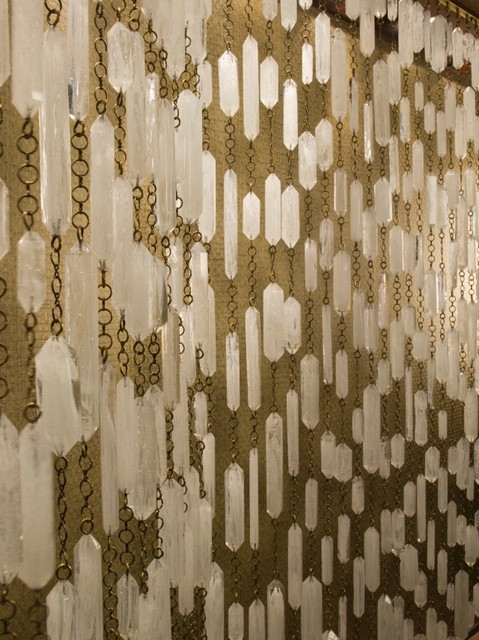
Rock crystal wands with patinated brass chains used as a curtain room divider and backdrop. 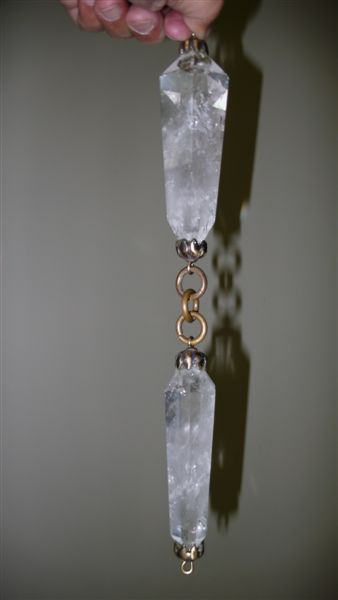
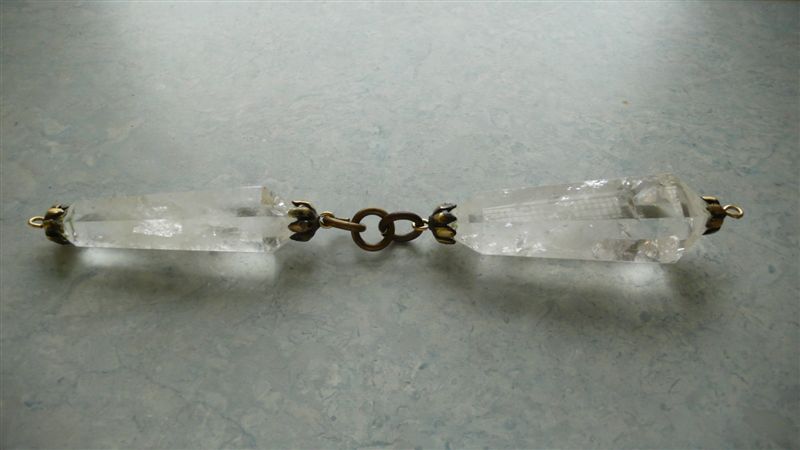
Prototypes for the rock crystal wand curtain (above and below), by De Ferranti
A layered tabletop, on the other hand, may transform traditional hardstone inlay into an image perceived through apparent depth.
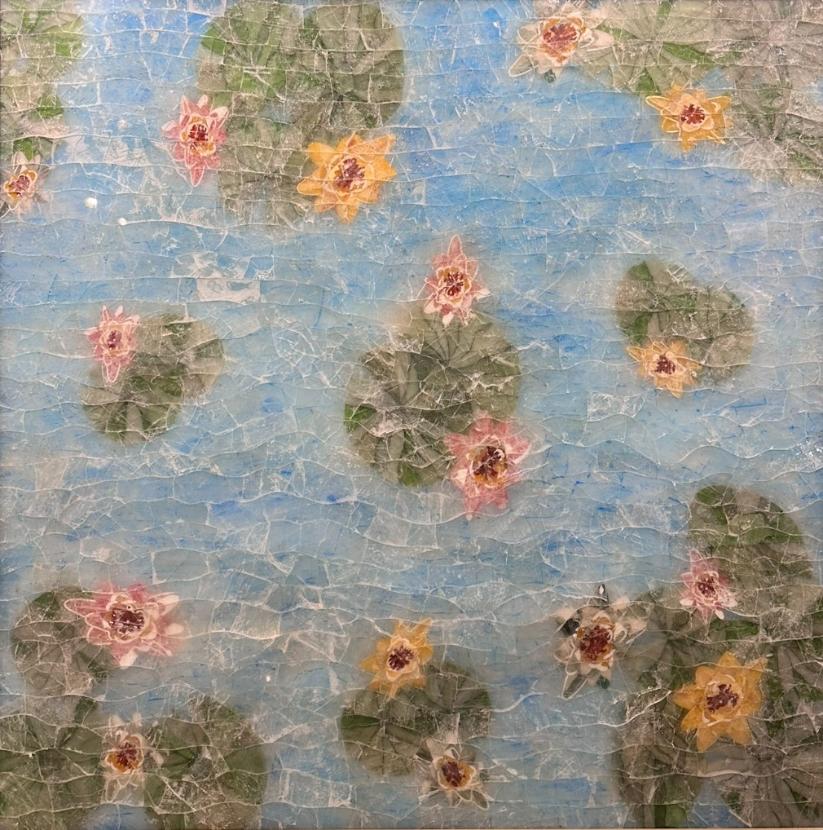
Rock crystal shards coat the top of this inlay and overlaid pietre dure table-top, inspired by Monet’s “Water Lillies”, by De Ferranti
Each application requires a different balance of material selection, craftsmanship and technical understanding. The most successful results are those in which the material's natural characteristics inform the design rather than being treated as obstacles to overcome.
From prehistoric rock crystal artefacts to Fatimid vessels, Renaissance collections, twentieth-century lighting and contemporary architectural installations, the history of rock crystal is also a history of human ingenuity. Its transformation has depended on generations of craftspeople learning to understand a material that is simultaneously hard, brittle, transparent and unpredictable. Contemporary technology has expanded what can be achieved, but it has not eliminated the need for judgement, patience and specialist skill. Whether fashioned into a small sculptural object or incorporated into an ambitious architectural commission, the material offers opportunities to create work whose character cannot be separated from its geological origins.
The De Ferranti Philosophy
At De Ferranti, we believe that an appreciation of exceptional materials begins with curiosity and deepens through knowledge. Rock crystal is a particularly compelling example, inviting us to look beyond its immediate beauty and consider the relationship between nature, craftsmanship and design. Our role is not simply to present what can be made, but to share an understanding of why certain approaches succeed, what challenges they present and where new possibilities might emerge.
We regard the exchange of knowledge as an essential part of our relationship with architects and interior designers. Through our articles, research and workshop experience, we hope to encourage informed experimentation, thoughtful specification and a continuing dialogue between traditional craftsmanship and contemporary practice. This commitment to professional learning lies at the heart of our approach and informs the CPD reflections that follow.
CPD Template for Architects
CPD Template for Architects
Logging This as CPD
If relevant to your role, current projects or wider professional development, this article may be recorded as self-directed or unstructured CPD.
Suggested Core Topic
The history, mineral properties, craftsmanship, architectural applications and project-specific specification of natural rock crystal and related quartz materials.
Suggested Learning Format
Self-directed reading.
Estimated Reading Time
40 minutes.
This Article Covered
- The working of rock crystal from prehistoric Iberia and Neolithic Britain through Greece, Rome, Fatimid Egypt and European collections.
- The distinction between natural crystalline quartz and manufactured crystal glass, including the traditions associated with Lalique, Swarovski and Bohemian glass.
- The geological character and sourcing of rock crystal from Brazil, India and Madagascar, together with the distinct appearance and applications of rose quartz.
- The optical effects of transparency, translucency, veiling, inclusions, surface finish and illumination.
- Key physical properties, including quartz hardness of approximately 7 on the Mohs scale, its brittleness and a density of approximately 2,650 kg/m³.
- The progression from raw block selection to orientation, cutting, hollowing, carving and polishing, and the importance of usable material yield.
- The differences between solid crystal, resin-treated material and resin-bound composites, including the implications for performance, ageing and maintenance.
- Architectural applications including basins, baths, door pulls, balustrade rosettes, screens, crystal wands and jali-inspired panels.
- The integration of rock crystal with metal filigree, pietra dura, layered decorative surfaces and backlit installations.
- Specification requirements for selected-block approval, natural fractures, agreed tolerances, edge protection, interfaces and fabrication drawings.
- The coordination of loading, structural support, anchors, plumbing, access, transportation and specialist installation.
- The value of representative samples and lighting mock-ups, together with project-specific checks for moisture, impact, cleaning, fire or acoustic performance where relevant.
Suggested CPD Record Summary
This article developed my understanding of natural rock crystal as both a historic material of decorative craftsmanship and a contemporary architectural medium. It traced the working of crystalline quartz from prehistoric artefacts and ancient vessels through Fatimid carving, European collecting and twentieth-century design. It also distinguished natural quartz from manufactured crystal glass and examined the varying optical characteristics and availability of material sourced from Brazil, India and Madagascar.
From a specification perspective, the article explored the relationship between hardness, brittleness, natural fractures, weight and fabrication yield. It considered solid and composite constructions, wet-area fittings, architectural screens, layered surfaces and illumination, alongside the importance of approving individual pieces, coordinating supports and fixings, reviewing mock-ups and establishing suitable maintenance requirements.
Suggested Reflection
How could the natural characteristics and technical limitations of rock crystal influence my approach to designing and specifying an architectural feature?
I would begin by defining the intended use, environmental conditions, load paths and visual effect before committing to dimensions or material origin. I would seek early input from the specialist artisan and relevant engineers so that the selected crystal, fabrication method, fixing details and installation sequence could be developed together.
I would also review representative material under the proposed lighting, distinguish acceptable natural inclusions from potentially compromising fractures, and assess whether a solid or composite construction is appropriate for the particular application rather than treating the two as equivalent.
Please Note
This content is intended for independent professional learning and should not be treated as accredited CPD unless expressly stated otherwise.
CPD Template for Interior Designers
CPD Template for Interior Designers
Where relevant to your professional practice, this article may be useful to record as self-directed or unstructured CPD.
Suggested CPD Record
Date completed: [DD/MM/YYYY]
Activity title: Rock Crystal: Architecture, Craft and History
Provider / publisher: De Ferranti
Format: Online article / self-directed reading
CPD category: Unstructured CPD
Estimated Reading Time: 40 minutes
Link: [Insert article URL]
What Did You Learn?
This article explored rock crystal as a natural form of quartz whose transparency, internal veils and inclusions give every piece an individual character. It followed the material from prehistoric objects and ancient carvings through Fatimid vessels, Renaissance collections and twentieth-century interiors, while distinguishing natural rock crystal from manufactured crystal glass.
It examined how clarity, translucency, colour, surface finish and lighting influence the experience of rock crystal, and how material from Brazil, India and Madagascar is selected for carving. Rose quartz was considered as a related material with its own colour and decorative possibilities. The article also introduced solid carving, resin-bound composites, specialist fabrication and the use of crystal in basins, baths, lighting, screens, furniture, metal filigree and layered pietra dura compositions.
Why Is This Relevant to Your Practice?
For interior designers, rock crystal offers a means of introducing natural luminosity, visual depth and sculptural character into an interior. A carved basin can become a focal point; a screen of crystal wands can filter views; and a carefully lit or layered installation can reveal patterns within the mineral that are not immediately visible in ordinary light.
Its individuality also makes material selection an essential part of the creative process. The design must respond to actual available pieces, their clarity and internal structure, as well as the practical requirements of support, fabrication, cleaning and daily use. This understanding helps us make considered choices and communicate realistic expectations to clients and project teams.
Actions / Follow-Up
- Consider where rock crystal would add genuine visual or spatial value, rather than introducing it solely as a luxury accent.
- Review samples or selected blocks in person, assessing clarity, veiling, inclusions, colour and the relationship between polished and natural surfaces.
- Test proposed crystal under the intended daylight and artificial lighting, including backlighting, colour temperature and dimming.
- Decide early whether a solid carving or a composite assembly best suits the desired scale, form, visual effect and conditions of use.
- Explore material pairings with brass, bronze, stone, joinery and pietra dura, considering how light and visual depth connect the different layers.
- Coordinate with artisans and the wider design team on dimensions, supports, fixing points, plumbing, installation access and maintenance.
- Explain natural variation and any approved treatments to clients, agreeing acceptable appearance through samples, drawings or mock-ups before fabrication.
Please Note
This content is intended for independent professional learning and should not be treated as accredited CPD unless expressly stated otherwise.